189 INVITED pool crashes 94% as August 2026 EOI snapshot lands
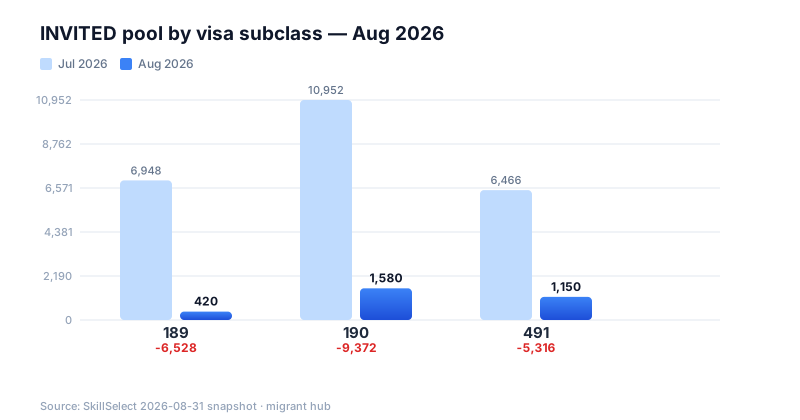
The 189 INVITED pool collapsed from 6,948 to just 420 in August 2026, while NT held its ground as the only state to resist the 190 drawdown.
Headlines
| Subclass | INVITED (this month) | INVITED (last month) | Change | LODGED |
|---|---|---|---|---|
| 189 | 420 | 6,948 | ↓ 6,528 | 13,597 |
| 190 | 1,580 | 10,952 | ↓ 9,372 | 53,065 |
| 491 | 1,150 | 6,466 | ↓ 5,316 | 50,274 |
The headline number from this month's SkillSelect snapshot is the Skilled Independent (Subclass 189) INVITED pool: as at 31 August 2026, just 420 EOIs sit in the INVITED state — down from 6,948 in last month's snapshot, a contraction of 94%. That is not a rounding artefact. The 189 is the hardest visa to win invitations on in any normal month, and this scale of drawdown suggests the bulk of previously invited applicants have either lodged applications, had their EOIs age off the 24-month rolling window, or both. All three subclasses shed INVITED volume heavily, but the 189's collapse is in a category of its own.
The 190 and 491 pools also fell sharply — the 190 dropped from 10,952 to 1,580 (↓ 85%) and the 491 from 6,466 to 1,150 (↓ 82%) — but neither matches the 189's near-total reset.
State breakdown — 190 nominations
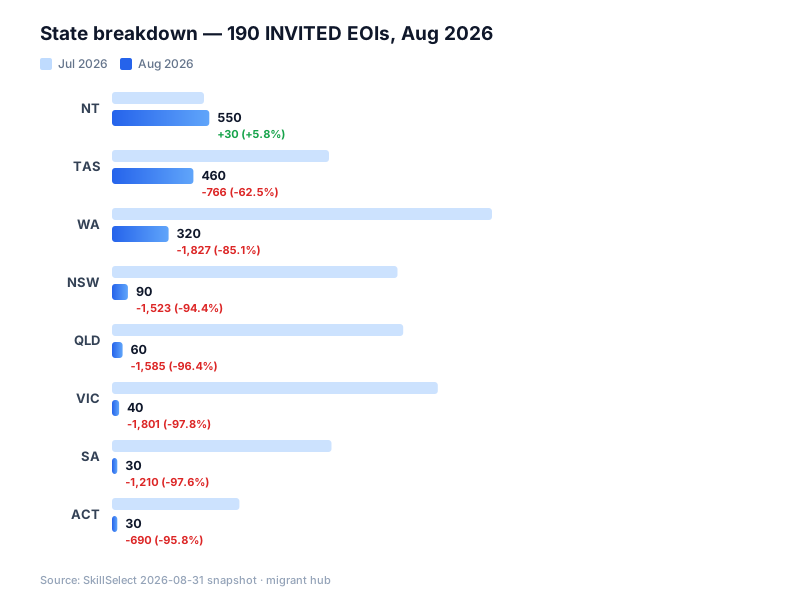
The state-level 190 picture is where the August data gets most revealing. The Northern Territory is the clear outlier: NT's INVITED pool actually grew (520 → 550, ↑ 6%), the only jurisdiction to resist the month's broad contraction. Tasmania fell but remained comparatively well-stocked (1,226 → 460), and Western Australia, despite a large absolute drop (2,147 → 320), retains more INVITED volume than most east-coast states.
NSW, VIC, SA, and ACT tell a different story. NSW's pool cratered from 1,613 to 90 (↓ 94%), VIC from 1,841 to 40 (↓ 98%), SA from 1,240 to 30 (↓ 98%), and ACT from 720 to 30 (↓ 96%). QLD followed a similar path (1,645 → 60, ↓ 96%). The practical implication: applicants holding state-nominated EOIs for these jurisdictions should check whether their invitation is still active and lodge promptly if it is.
For the 491, WA (1,106 → 450) and NT (830 → 290) and TAS (700 → 280) are the remaining pockets of volume. NSW (850 → 30), VIC (850 → 20), SA (690 → 20), and ACT (480 → 10) have all but emptied. Drill into the per-state occupation detail in the dashboard.
Occupation movements
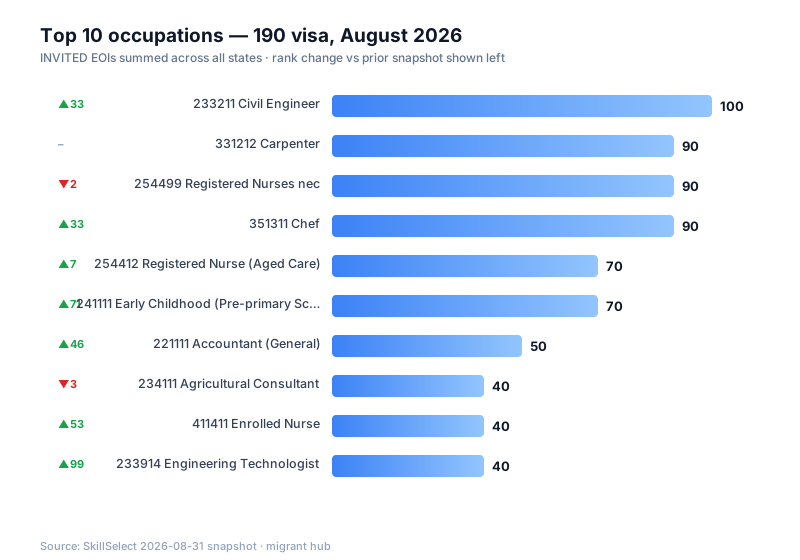
With overall INVITED volumes compressed, the occupation rankings carry a different signal than usual — small absolute counts can produce large rank swings.
On the 189, Chef MLTSSL surged from rank 51 last month to rank 1 this month (40 → 60 EOIs), while Early Childhood (Pre-primary School) Teacher MLTSSL leapt from rank 116 to rank 3 (10 → 40). The most dramatic fall belongs to Registered Nurses nec MLTSSL: last month's dominant occupation at rank 1 with 684 EOIs now sits at rank 4 with just 40. Carpenter MLTSSL made a similar plunge — rank 2 last month (505 EOIs) to rank 7 this month (20 EOIs). Mechanical Engineer MLTSSL enters the top 10 for the first time with no prior rank recorded.
On the 190, Civil Engineer MLTSSL jumps from rank 34 to rank 1 on the same 100 invited EOIs — its count is unchanged but the field compressed around it. Chef MLTSSL moved from rank 37 to rank 4, and Engineering Technologist MLTSSL climbed from rank 109 to rank 10 (20 → 40). Agricultural Consultant MLTSSL fell hardest in absolute terms — from rank 5 with 270 to rank 8 with 40.
On the 491, Chef MLTSSL topped the list again (90 EOIs, rank 24 → 1). Software Engineer MLTSSL re-entered relevance, climbing from rank 77 to rank 7 (20 → 40). Hospital Pharmacist STSOL appears in the top 10 with no prior rank — a new entrant. Registered Nurses nec MLTSSL dropped from rank 6 (190 EOIs) to rank 10 (30 EOIs).
Processing time update
Effective 4 August 2026, the Skilled Nominated (Subclass 190) median processing time dropped from 13 months to 12 months. The p75 — the point by which three quarters of granted applicants have received their visa — held at 15 months. That 15-month p75 is a useful planning figure: once invited, most 190 applicants should expect to wait up to 15 months for a grant. No processing time data is published for the 189 or 491 this month.
Common questions
Why did the 189 INVITED pool fall by 94% in August?
The 189 INVITED pool as at 31 August 2026 reflects a rolling 24-month window of valid EOIs in that state. A dramatic month-over-month drop of this scale typically means a large cohort of previously invited applicants has moved to LODGED after submitting visa applications, or their EOIs have aged off the 24-month eligibility window. It does not necessarily mean fewer invitations were issued — it means the outstanding INVITED count has been drawn down sharply.
Does the collapse in INVITED numbers mean cutoffs are rising?
Not directly. INVITED pool size and cutoff points are related but separate signals. A shrinking INVITED pool can reflect high lodgement activity (applicants acting quickly on invitations), EOIs aging off the window, or a change in invitation round volume. Cutoff scores are set at the point of each invitation round, and you would need to track the scores at which invitations were issued — not just the resulting pool count — to draw conclusions about where cutoffs are heading.
Why is NT the only state where the 190 INVITED pool grew?
NT's INVITED pool moved from 520 to 550 in August, a modest 6% increase. This suggests NT either ran a small invitation round during the period or had relatively low lodgement activity compared to other states, leaving more EOIs sitting in INVITED status. NT consistently nominates a narrower occupational mix with strong healthcare and trades focus, and its smaller absolute pool makes it less susceptible to large proportional swings.
How should I read the occupation rank changes this month?
With total INVITED volumes compressed to a fraction of last month's figures, occupation rank changes are largely a product of the overall drawdown rather than targeted changes in which occupations states are selecting. An occupation like Civil Engineer holding 100 EOIs jumps to rank 1 on the 190 simply because every other occupation's pool shrank proportionally more. Focus on whether your occupation appears at all in the INVITED pool, not just its rank position.
What does the 190 processing time improvement mean for applicants?
The median processing time for the 190 shifted from 13 to 12 months as of 4 August 2026, meaning half of granted applicants received their visa within 12 months of lodging. The p75 stayed at 15 months. This is a marginal but genuine improvement at the median — applicants should still plan for up to 15 months as a conservative benchmark, particularly if their case involves complex documentation.
This post was generated from the latest SkillSelect snapshot. Explore the same data in the dashboard.